

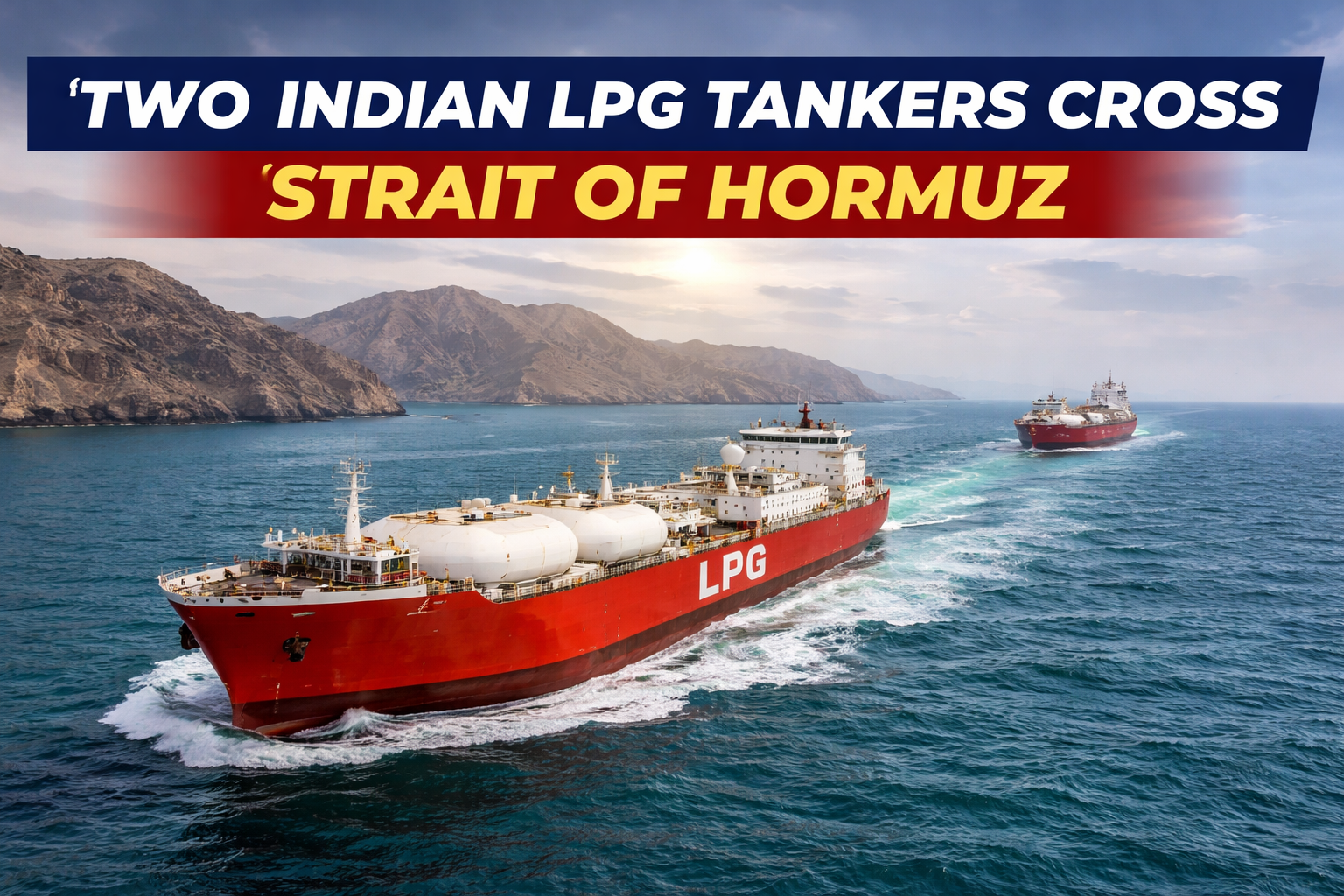
Two additional Indian liquefied petroleum gas (LPG) carriers have successfully transited the strategically critical :contentReference[oaicite:0]{index=0}, sailing close to the Iranian coastline amid an atmosphere of heightened geopolitical tension in West Asia. The movement of these vessels marks an important development for India’s energy supply chain at a time when shipping routes across the Middle East are under unprecedented scrutiny.
The transit comes against the backdrop of escalating regional instability, including military exchanges, diplomatic standoffs, and concerns over maritime security. Despite these risks, the passage of the Indian LPG ships indicates that vital energy corridors remain open — at least for now — providing short-term relief to import-dependent economies.
A Narrow Waterway With Global Consequences
The Strait of Hormuz is widely regarded as the most important oil and gas transit chokepoint in the world. Roughly one-fifth of global petroleum liquids and a substantial share of liquefied natural gas and LPG shipments pass through the narrow waterway each day. Any disruption, even temporary, can send shockwaves through global energy markets.
For India, which imports a significant portion of its crude oil and cooking gas requirements, uninterrupted access to the Strait of Hormuz is not merely a commercial issue but a matter of national energy security. LPG plays a crucial role in household cooking fuel, particularly under government-supported clean energy programs.
Why These Ship Movements Matter for India
The successful transit of the LPG carriers is especially significant at a time when shipping companies across the world are reassessing risk exposure in the Gulf region. Elevated insurance premiums, rerouting of vessels, and delays at ports have already raised costs for importers.
Analysts say the movement of Indian LPG vessels suggests that maritime corridors remain functional despite military tensions. However, they caution that the situation remains fluid, and future transits will depend heavily on security assessments and diplomatic developments.
Geopolitical Backdrop: A Region on Edge
The broader geopolitical environment in West Asia has been marked by uncertainty, with rising hostilities, retaliatory actions, and diplomatic friction involving multiple regional and global powers. These tensions have renewed fears of disruptions to shipping lanes, particularly in narrow chokepoints such as the Strait of Hormuz.
Iran, which controls a significant stretch of coastline along the strait, has historically emphasized its strategic leverage over maritime traffic. While no official restrictions have been imposed, the heightened military presence in the region has raised the risk profile for commercial shipping.
Energy Markets React With Caution
Global energy markets have responded cautiously to developments in the Gulf. Oil and gas prices have shown volatility, driven largely by geopolitical headlines rather than changes in physical supply. Traders remain sensitive to any signals that might suggest future disruptions.
The passage of Indian LPG carriers has temporarily eased market anxiety, but analysts warn that sustained stability will require a reduction in regional tensions. Even isolated incidents can have an outsized impact on market sentiment.
Shipping Industry Under Pressure
The international shipping industry has been forced to navigate a complex risk environment. Shipowners are weighing the costs of longer routes against the dangers of transiting high-risk waters. Insurance providers have also adjusted premiums, reflecting the perceived threat level.
Some shipping firms have chosen to delay sailings, while others have sought naval escorts or enhanced security measures. For energy-importing nations, these decisions translate into higher costs and potential supply delays.
India’s Strategic Calculations
India’s energy planners have long emphasized diversification of supply sources and routes to reduce dependence on any single chokepoint. However, the Strait of Hormuz remains unavoidable for much of the country’s energy imports.
In recent years, India has expanded its strategic petroleum reserves and strengthened diplomatic engagement with key regional players. These measures are designed to cushion the impact of short-term disruptions and provide flexibility during crises.
What Lies Ahead
While the safe passage of these LPG carriers is a positive signal, experts caution against complacency. The regional security environment remains unpredictable, and maritime risks could escalate rapidly if tensions worsen.
For now, the transit underscores the resilience of global energy logistics even under pressure. It also highlights the delicate balance between geopolitics and commerce in one of the world’s most strategically sensitive regions.
As diplomatic efforts continue and military posturing evolves, energy-importing nations like India will remain vigilant, monitoring every development that could affect the lifelines of their economies.