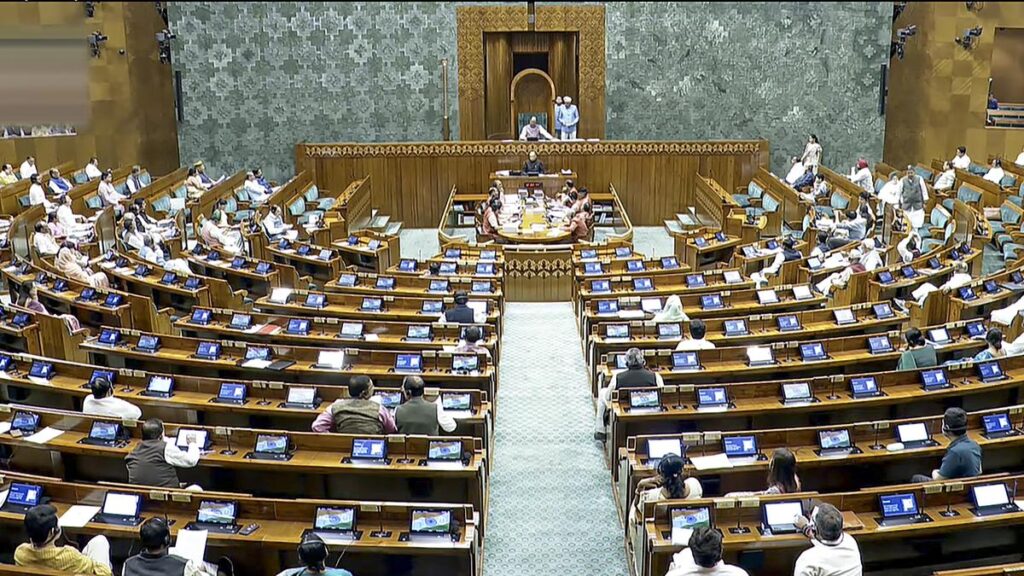
Parliament Budget Session LIVE: Lok Sabha Passes Insolvency and Bankruptcy Code (Amendment) Bill, 2025
The Budget Session of :contentReference[oaicite:0]{index=0} witnessed a major legislative development on Monday as the :contentReference[oaicite:1]{index=1} passed the Insolvency and Bankruptcy Code (Amendment) Bill, 2025 after an intense debate between the Treasury benches and the Opposition.
🔑 Key Highlights
- Lok Sabha clears IBC (Amendment) Bill, 2025 by voice vote
- Government says reform will speed up insolvency resolution
- Opposition flags concerns over creditor dominance
- Bill aims to strengthen India’s credit ecosystem
- Next stop: Rajya Sabha discussion
🔴 LIVE Updates
The Insolvency and Bankruptcy Code (Amendment) Bill, 2025 is tabled in the Lok Sabha by the Finance Minister, seeking to introduce structural reforms to India’s insolvency framework.
Opposition members demand detailed scrutiny of the Bill, alleging that certain provisions may tilt the balance in favour of large financial creditors at the cost of small borrowers.
The government responds, asserting that the amendments are designed to improve resolution timelines and reduce litigation delays that have plagued insolvency proceedings.
After nearly four hours of debate, the Lok Sabha passes the Insolvency and Bankruptcy Code (Amendment) Bill, 2025.
📘 What Is the Insolvency and Bankruptcy Code (Amendment) Bill, 2025?
The Insolvency and Bankruptcy Code (IBC), first introduced in 2016, was designed to consolidate India’s fragmented insolvency laws into a single, time-bound framework. The 2025 Amendment Bill seeks to address implementation gaps that have emerged over the years.
According to the government, prolonged court cases, frequent appeals, and procedural delays have weakened the effectiveness of the IBC. The new amendments aim to restore confidence among lenders while ensuring faster recovery of stressed assets.
🧾 Major Changes Proposed in the Amendment
- Stricter timelines for resolution professionals
- Reduced scope for repeated litigation
- Enhanced powers for creditors’ committees
- Clearer rules for voluntary insolvency
- Improved protection for operational creditors
🏛️ Government’s Stand
“These amendments will strengthen India’s insolvency ecosystem and improve credit discipline across sectors,” the Finance Minister said during the debate.
The government argued that faster insolvency resolution would free up capital, support banks in reducing non-performing assets, and encourage investment in stressed but viable businesses.
🗳️ Opposition’s Concerns
Opposition leaders raised objections over what they described as “excessive concentration of power” with financial creditors. They warned that smaller enterprises and individual borrowers could be adversely affected if safeguards are not adequately enforced.
“Speed should not come at the cost of fairness,” an Opposition MP remarked.
📊 Impact on Economy and Banking Sector
Experts believe the passage of the Bill could have long-term implications for India’s banking sector. By improving recovery rates and reducing uncertainty, the amendments are expected to strengthen lender confidence.
At the same time, analysts caution that effective implementation will be crucial. Without regulatory oversight and judicial balance, faster processes may still face resistance on the ground.
⏭️ What Happens Next?
With the Bill cleared by the Lok Sabha, it will now be taken up by the Rajya Sabha for consideration. If approved by the Upper House, the legislation will require Presidential assent before becoming law.
🧠 Conclusion
The passage of the Insolvency and Bankruptcy Code (Amendment) Bill, 2025 marks a significant step in India’s ongoing economic reform journey. As Parliament continues its Budget Session, attention will now shift to how the new provisions are debated in the Rajya Sabha and eventually implemented on the ground.
This is a developing story. More updates will follow as Parliament proceedings continue.
universaltimes.in is proudly powered by WordPress