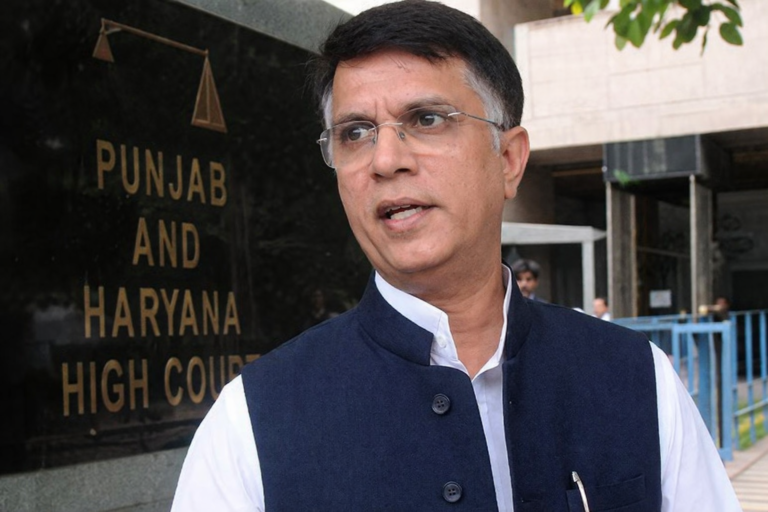
Congress leader Pawan Khera outside High Court during legal proceedings
Telangana High Court Reserves Order on Pawan Khera’s Anticipatory Bail Plea – Part 1

Background and Origin of the Case

Hyderabad | 10 April 2026

The Telangana High Court on Wednesday reserved its order on the anticipatory bail plea filed by Congress leader Pawan Khera in connection with a criminal case linked to an alleged passport-related controversy. The case has drawn widespread attention due to its political implications and the involvement of the family of a sitting chief minister.

The FIR against Khera was lodged following a complaint filed by the wife of the Assam Chief Minister. The complaint alleged that certain public remarks and social media statements made by the Congress spokesperson were misleading, defamatory, and aimed at causing reputational damage. Based on the complaint, police registered a case under various provisions relating to defamation and intentional insult.

Following the registration of the FIR, Khera approached the Telangana High Court seeking anticipatory bail, citing apprehension of arrest. His petition argued that the case was politically motivated and that criminal law was being used as a tool to intimidate an opposition leader.

Why the Case Reached Telangana High Court

One of the key aspects of the case is the question of jurisdiction. Khera’s legal team argued that the alleged statements were made while he was present in Telangana and were circulated digitally, giving the Telangana High Court the authority to hear the plea.

The defence also highlighted the growing trend of interstate FIRs being filed against political leaders, journalists, and activists, forcing them to seek legal protection from courts outside the states where complaints are registered.

The defence told the court that arrest in a speech-related case would amount to punishment without trial and would violate the fundamental right to personal liberty.

Nature of the Allegations

According to the complainant, the remarks made by Khera questioned passport-related details and were shared widely on social media platforms. The complaint stated that such remarks went beyond political criticism and amounted to personal allegations that harmed reputation.

Khera, however, denied all allegations, maintaining that his comments were part of routine political discourse and did not involve the dissemination of false information. His counsel argued that questioning those in positions of power is a legitimate democratic exercise.

Legal Importance of Anticipatory Bail

Anticipatory bail is a preventive legal remedy that protects individuals from arrest in cases where they believe they may be taken into custody unjustly. In politically sensitive matters, courts have repeatedly emphasised that arrest should not be the first step unless custodial interrogation is necessary.

In this case, Khera’s petition stressed that the investigation was based on publicly available material and did not require custodial interrogation. The plea further stated that arrest would cause irreversible harm to reputation and political standing.

What the Court Did on Day One

After hearing arguments from both sides, the Telangana High Court chose to reserve its order on the anticipatory bail plea. The court indicated that it would carefully examine the balance between the right to free speech and the right to reputation before delivering its decision.

Until the order is pronounced, interim protection granted earlier continues, preventing any coercive action against the Congress leader.

Telangana High Court Reserves Order on Pawan Khera’s Anticipatory Bail Plea – Part 2

Pawan Khera Bail Case: Court Arguments and Political Reactions

Hyderabad |10 April 2026 |

Arguments Presented Before the Court

During the hearing of the anticipatory bail plea, senior advocates appearing for Pawan Khera presented a detailed legal defence, focusing on constitutional protections, absence of criminal intent, and the political nature of the dispute. The defence argued that the FIR was an attempt to convert a political disagreement into a criminal offence.

The counsel submitted that the alleged remarks were made in the course of political debate and were directed at public conduct, not personal life. According to the defence, criminal defamation cannot be invoked merely because statements are uncomfortable or critical.

It was further argued that the case does not involve forgery, impersonation, or use of fake documents. Instead, it revolves around speech already in the public domain, which does not require custodial interrogation.

The defence maintained that arrest in a speech-related case would amount to punishment before trial and would violate personal liberty.

Stand Taken by the Prosecution

The prosecution opposed the anticipatory bail plea, stating that the remarks were not innocent political criticism but targeted allegations against a private individual. According to the prosecution, the statements caused serious reputational harm and mental distress.

It was argued that reputation is a fundamental right and deserves protection under criminal law. The prosecution also claimed that the investigation was still at an early stage and that granting anticipatory bail could affect the probe.

The state further submitted that digital evidence, including social media posts and video clips, needed to be examined thoroughly, and custodial questioning could not be ruled out at this stage.

Observations Made by the High Court

The Telangana High Court carefully examined the submissions made by both sides. The bench questioned whether arrest was truly necessary in a case involving public speech and asked the prosecution to clarify how custodial interrogation would assist the investigation.

The court also observed that criminal law should not be used casually in political disputes and that courts have a duty to protect individual liberty while ensuring fair investigation.

While refraining from making final observations, the bench indicated that it would consider established principles governing anticipatory bail, including the nature of the offence, intention of the accused, and likelihood of misuse of arrest powers.

Political Reactions to the Case

The case triggered sharp political reactions across the country. Leaders from the Congress party alleged that the FIR was politically motivated and aimed at silencing opposition voices. They accused the ruling establishment of misusing legal machinery to intimidate critics.

On the other hand, leaders from the ruling side dismissed these allegations, stating that no individual is above the law and that legal remedies are available to all parties.

Several opposition leaders and civil rights activists expressed concern over the increasing use of criminal cases in political disputes, warning that such practices could weaken democratic institutions.

Growing Debate on Criminal Defamation

The case has reignited the national debate on criminal defamation and its role in a democratic society. Legal commentators pointed out that while reputation is important, criminal law should not be the first response to political criticism.

Many experts believe that courts must draw a clear line between genuine defamation and political speech to prevent misuse of the legal system.

Why This Case Matters

Beyond the immediate parties involved, the case raises broader questions about free speech, political accountability, and the limits of criminal law. The High Court’s decision is expected to send a strong message on how similar cases should be handled in the future.

Telangana High Court Reserves Order on Pawan Khera’s Anticipatory Bail Plea – Part 3

Pawan Khera Bail Case: Legal Implications and What Lies Ahead

Hyderabad | 10 April 2026 |

Legal Experts on the Case

Legal experts following the proceedings believe the Telangana High Court’s decision will have implications beyond this individual case. Many senior lawyers have pointed out that anticipatory bail plays a crucial role in protecting citizens from arbitrary arrest, especially in matters involving speech and expression.

According to experts, courts have consistently held that arrest should not be automatic in cases where the alleged offence does not involve violence, financial fraud, or destruction of evidence. In speech-related cases, custodial interrogation is rarely required, making anticipatory bail an important safeguard.

Several legal commentators observed that criminal law should not be used as a substitute for political debate or civil remedies.

Possible Outcomes of the High Court’s Decision

The Telangana High Court has several options before it. The court may grant anticipatory bail with conditions, such as cooperation with the investigation and restrictions on public commentary. Such an order would reinforce the principle that arrest should be the exception, not the rule.

Alternatively, the court could refuse anticipatory bail, allowing the investigating agency to proceed under law. However, legal observers note that even in such a scenario, higher courts remain open for relief.

The court may also choose a middle path by extending interim protection while issuing directions to ensure a fair and limited investigation.

Impact on Political Speech

The case has reignited a broader discussion on the limits of political speech in India. In recent years, multiple political leaders, journalists, and activists have faced criminal cases over statements made during public debates.

Critics argue that frequent use of criminal provisions for speech-related matters discourages open discussion and weakens democratic culture. Supporters of stricter enforcement, however, maintain that freedom of speech cannot be absolute and must respect individual dignity.

Interstate FIRs and Legal Burden

Another significant issue highlighted by the case is the growing number of interstate FIRs. With social media enabling nationwide reach, individuals increasingly face legal proceedings in distant states, creating logistical and financial challenges.

Courts have repeatedly acknowledged this concern and stressed the need to prevent harassment through multiple or distant legal actions.

What Happens After the Verdict

Once the High Court pronounces its order, the immediate legal position of Pawan Khera will become clear. If anticipatory bail is granted, the investigation may continue without arrest. If denied, further legal remedies may be pursued.

Regardless of the outcome, the judgment is likely to be cited in future cases involving political speech and anticipatory bail.

Conclusion

The anticipatory bail plea filed by Pawan Khera has evolved into a significant legal and political moment. Beyond the immediate dispute, the case highlights ongoing tensions between free expression, reputation, and the use of criminal law in political conflicts.

As the country awaits the Telangana High Court’s decision, the outcome is expected to shape future conversations on democracy, dissent, and personal liberty in India. The ruling will not only affect the parties involved but may also influence how similar cases are approached by courts in the years ahead.

Political Reactions and Timeline in Pawan Khera Bail Case – Part 4

National Reactions and Timeline of the Pawan Khera Case

New Delhi | April 2026 |

Political Reactions Across Parties

The legal proceedings involving :contentReference[oaicite:0]{index=0} have triggered sharp political reactions across party lines. Leaders from the Indian National Congress have termed the FIR and subsequent legal action as politically motivated, alleging misuse of criminal law to silence opposition voices.

Congress leaders argued that disagreements in public discourse should be addressed through debate or civil remedies rather than criminal prosecution. Several party spokespersons stated that the case reflects a shrinking space for dissent in contemporary Indian politics.

On the other hand, leaders from the ruling party defended the FIR, stating that no individual is above the law and that public figures must be cautious while making allegations that could affect the reputation of private citizens.

Political analysts note that such cases often escalate quickly due to their symbolic value rather than their legal complexity.

Chronological Timeline of Key Events

Day 1: Public remarks made during a media interaction spark controversy.

Day 3: FIR registered in Assam based on a complaint related to passport allegations.

Day 5: Legal team moves Telangana High Court seeking anticipatory bail.

Day 7: Interim protection granted; court hears detailed arguments.

Day 10: High Court reserves its order after concluding hearings.

Role of Social Media and Amplification

Social media platforms played a significant role in amplifying the controversy. Clips of the original remarks circulated widely, often without context, intensifying public reaction and political polarization.

Legal experts caution that viral content can complicate judicial proceedings by creating parallel narratives that may influence public perception, even as courts remain guided strictly by law and evidence.

Passport Allegations and Legal Sensitivity

Cases involving passport documentation are treated with heightened sensitivity under Indian law due to national security and identity verification concerns. However, experts clarify that allegations must meet strict evidentiary standards before criminal liability can be established.

In this case, the defense has maintained that the remarks were political in nature and not intended as a factual assertion requiring criminal investigation.

Wider National Context

The matter fits into a broader national trend where political speech increasingly intersects with criminal law. Courts across India have repeatedly emphasized the need to balance reputation, dignity, and freedom of expression.

Several past judgments have underlined that criminal law should be a last resort, particularly when civil remedies or public clarification can adequately address grievances.

Awaiting Judicial Clarity

As the Telangana High Court prepares to deliver its decision, political circles and legal observers continue to monitor the case closely. The verdict is expected to clarify how courts may approach similar disputes in the future.

Whether the ruling reinforces protections for political speech or underscores accountability for public statements, its impact is likely to extend beyond the immediate parties involved.