Last month, Prime Minister Narendra Modi urged citizens to recycle idle gold instead of relying solely on newly imported gold.
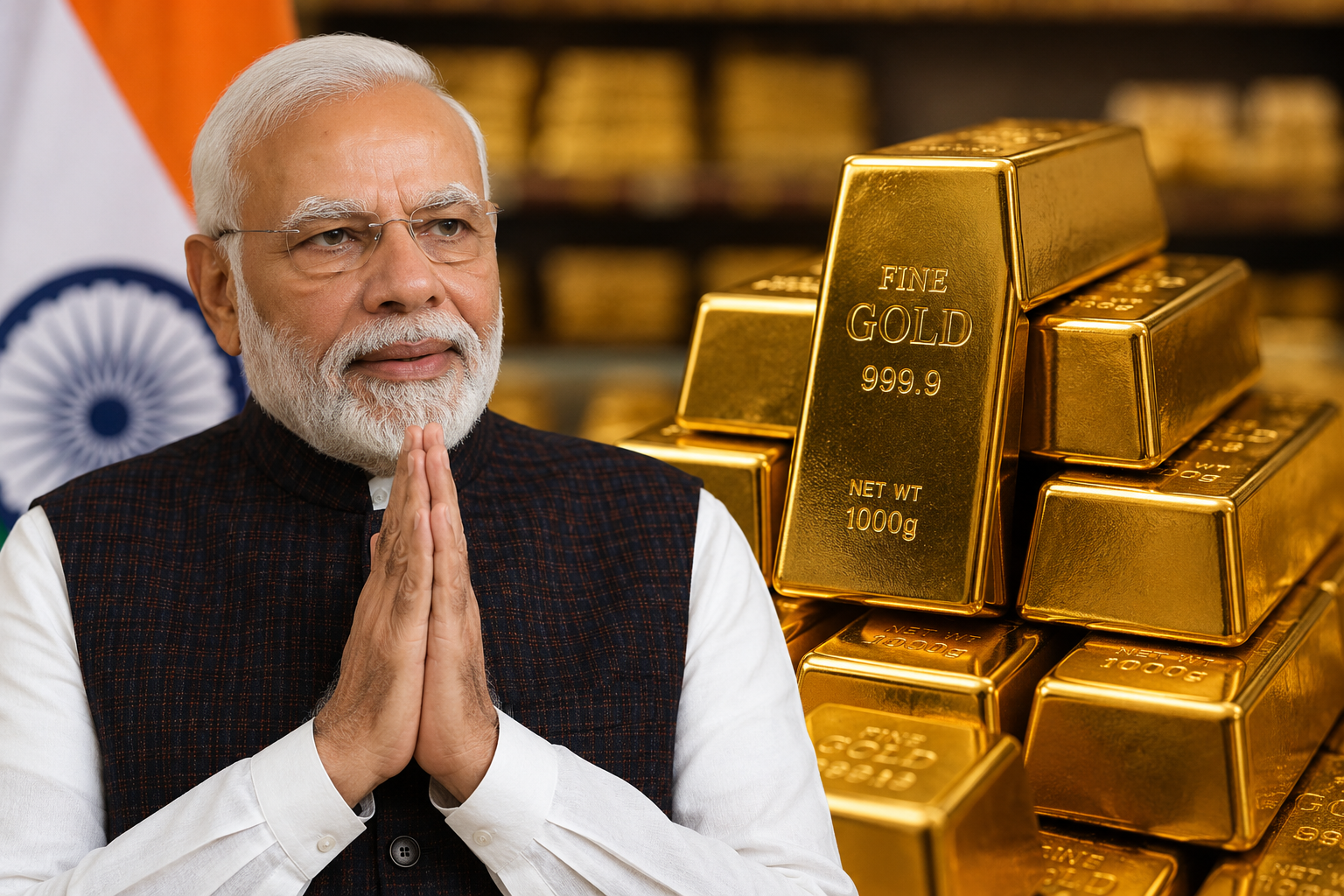
India’s relationship with gold is unlike that of any other nation. From grand weddings and religious festivals to long-term savings and family inheritance, gold is deeply woven into the country’s social and economic fabric. Yet even as Indians continue to buy fresh gold year after year, a vast quantity of the precious metal already exists within the country—lying unused in lockers, cupboards, temples, and vaults.
Last month, Prime Minister Narendra Modi called on citizens to rethink their approach to gold consumption. His message was straightforward but powerful: before importing more gold from abroad, India should first make better use of the gold it already owns.
Behind this appeal lies a striking reality. Industry estimates suggest Indian households and temple institutions together hold between 30,000 and 32,000 tonnes of gold, with some assessments placing the figure even higher. In value terms, this translates into several trillion dollars’ worth of wealth—much of it sitting idle.
India’s Gold Paradox
India is one of the world’s largest consumers of gold, yet it is also home to the largest privately held gold reserves. Despite this enormous domestic stock, the country continues to rely heavily on imports to meet annual demand.
Every year:
- Millions of households purchase new jewellery and bullion
- Large quantities of gold are imported using foreign currency
- The trade deficit widens as import bills rise
This contradiction—abundance at home and dependence on imports—has prompted policymakers to look for ways to bring idle gold back into economic circulation.
What Does Gold Recycling Really Mean?
Gold recycling refers to the process of converting existing gold into reusable, high-purity metal that can re-enter the supply chain.
This includes:
- Old or broken jewellery
- Outdated ornaments
- Coins and bars
- Industrial and electronic scrap
The process typically involves testing the metal for purity, melting it down, refining it, and producing gold of very high purity—often up to 99.9 per cent. This refined gold can then be used again to manufacture new jewellery, coins, or bullion.
In simple terms, recycling allows existing gold to be reused without losing its intrinsic value.
Why Recycling Gold Makes Economic Sense
1. Reducing Import Dependence
India spends tens of billions of dollars every year importing gold. Each shipment requires foreign exchange, placing pressure on the trade balance and the current account.
Recycling gold domestically reduces the need for fresh imports. Every gram reused from within the country is one less gram bought from overseas markets.
2. Supporting Currency Stability
High gold imports increase demand for foreign currency, which can weaken the rupee. Lower imports help ease this pressure and support macroeconomic stability.
3. Environmental Benefits
Gold mining is resource-intensive and environmentally damaging. Recycling existing gold dramatically lowers the need for new mining, reducing energy use and environmental impact.
4. Unlocking Dormant Wealth
Idle gold does not generate income. Once recycled or exchanged, it can support economic activity, employment, and industrial growth.
How Big Could the Impact Be?
One of the most compelling aspects of gold recycling is how little change is needed to create a big effect.
Experts estimate that:
- Recycling just 1 per cent of India’s household and temple gold annually could reduce gold imports by 25–30 per cent
- Even a modest shift could save billions of dollars in foreign exchange each year
- Domestic refining, jewellery manufacturing, and allied industries would see increased activity
Such outcomes would have ripple effects across the economy, far beyond the gold sector alone.
Why So Much Gold Remains Unused
Gold’s idle status is rooted in both culture and financial habits.
For generations, Indian families have viewed gold as:
- A secure store of value
- Protection against inflation
- Insurance for emergencies
- A symbol of status and tradition
Much of this gold is accumulated over decades—through weddings, gifts, and inheritance. While some pieces are worn regularly, many remain untouched for years. Designs go out of fashion, ornaments get damaged, or jewellery is simply kept for sentimental reasons.
Despite this, the underlying value of the gold remains intact.
Gold recycling offers a middle path: families can preserve the value of their gold while allowing it to become economically useful again.
Changing Attitudes Among Consumers
Industry observers note that Indians have long been open to exchanging gold when needed. Selling or pledging jewellery to fund major expenses—such as weddings, education, or home purchases—has always been part of financial life.
What is changing now is:
- Greater transparency in exchange and recycling processes
- Better purity testing and pricing mechanisms
- Attractive exchange and redesign schemes offered by jewellers
Rising gold prices have also played a role. As the value of gold climbs, households are increasingly aware of how much wealth is locked away in unused ornaments. This has encouraged many to consider recycling or exchanging old jewellery rather than buying new gold outright.
Government’s Broader Strategy
The push for gold recycling fits into the government’s wider goals of:
- Reducing import dependence
- Strengthening external balances
- Promoting self-reliance
- Bringing more assets into the formal economy
Alongside recycling, initiatives such as gold exchange programmes and gold-backed financial instruments aim to shift preferences away from excessive physical imports.
Rather than discouraging gold ownership, the focus is on using gold more efficiently.
Challenges That Remain
Despite its potential, gold recycling faces hurdles:
- Emotional attachment: Jewellery often carries sentimental value
- Trust issues: Some consumers hesitate to part with physical gold
- Awareness gaps: Many are still unfamiliar with organised recycling options
Addressing these concerns through better communication, standardisation, and consumer protection will be key to scaling up recycling efforts.
A National Resource in Waiting
India’s estimated 32,000 tonnes of gold represent more than personal wealth—they form a vast, untapped national resource. If even a small portion of this gold is gradually brought back into circulation, the benefits could be substantial.
Lower imports, a stronger external balance, environmental gains, and increased domestic economic activity are all within reach.
Prime Minister Modi’s appeal is not about asking citizens to give up their gold. It is about encouraging a shift in mindset—one that sees gold not only as something to store, but also as something that can actively support the country’s economic future.
In that sense, India’s gold is no longer just a symbol of tradition. It may well become a tool of transformation.
universaltimes.in is proudly powered by WordPress