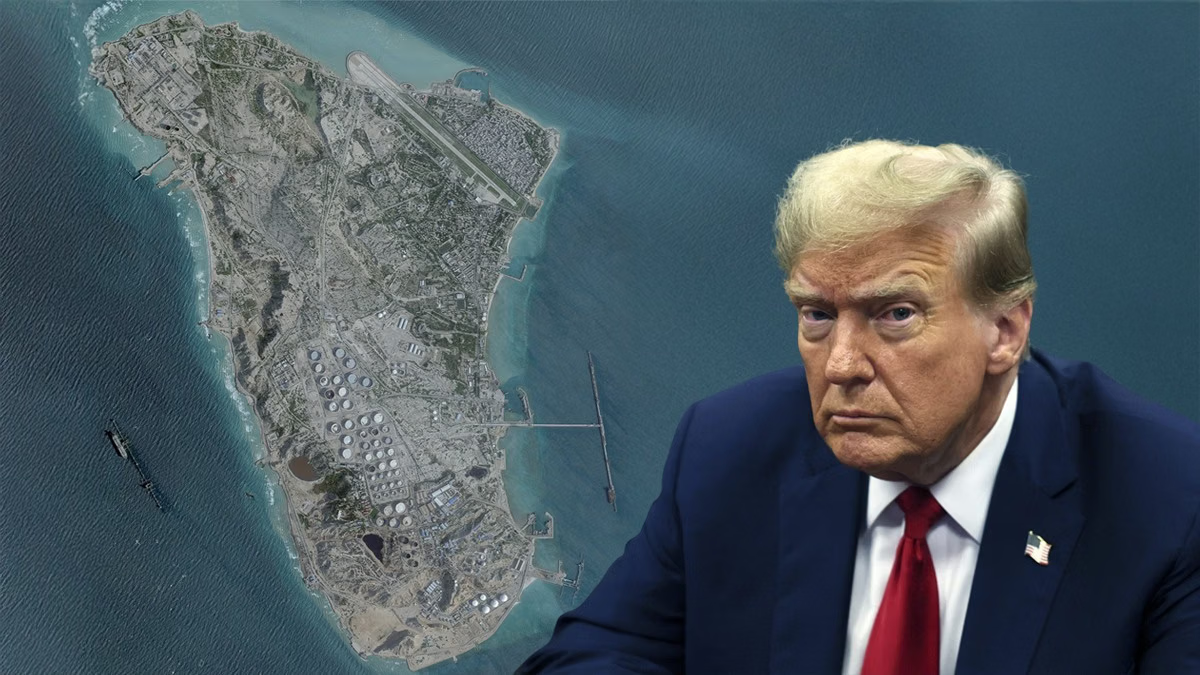
Trump Hints At Seizing Iran’s Kharg Island As Global Tensions Escalate
A fresh wave of geopolitical uncertainty has gripped global markets and diplomatic circles after former U.S. President :contentReference[oaicite:0]{index=0} made controversial remarks suggesting that the United States could consider taking control of Iran’s oil infrastructure, including the strategically vital Kharg Island.
Rising Rhetoric Amid a Volatile Conflict
Trump’s remarks come at a time when tensions between Washington and Tehran are already at a boiling point. The Middle East has witnessed weeks of military escalation, maritime disruptions, and diplomatic deadlock, with oil markets reacting sharply to every development.
Speaking during an interview with international media, Trump reiterated his long-held position that economic pressure — particularly through energy control — remains the most effective strategy against adversaries.
Why Kharg Island Matters
:contentReference[oaicite:1]{index=1} is located in the northern Persian Gulf and serves as Iran’s primary oil export terminal. Any disruption to operations on the island could have immediate global consequences, including:
- Sharp increases in global crude oil prices
- Supply shortages in Asia and Europe
- Heightened military risk in the Persian Gulf
Energy analysts warn that even the suggestion of military action near Kharg Island is enough to trigger panic in financial markets.
Global Oil Markets React
Within hours of Trump’s comments, benchmark oil prices surged amid fears of supply disruption. Shipping companies reportedly began reassessing routes through the Strait of Hormuz, one of the world’s busiest oil transit corridors.
Market volatility reflects growing concerns that rhetoric could translate into real military or economic action.
Iran’s Likely Response
Iranian officials have consistently warned that any attempt to seize national assets would be viewed as an act of war. Tehran maintains that its energy infrastructure is sovereign territory and protected under international law.
Military experts caution that Iran possesses significant defensive capabilities in the region, making any operation against Kharg Island extremely risky.
International Law And Strategic Risks
Seizing oil assets of another nation would raise serious legal questions under international law. Analysts note that such actions could:
- Trigger retaliatory strikes
- Invite global condemnation
- Undermine existing diplomatic frameworks
The United Nations has repeatedly urged restraint, emphasizing the need for dialogue rather than confrontation.
Domestic Reactions In The United States
Trump’s comments have sparked intense debate within the U.S. political establishment. Supporters argue that aggressive economic tactics deter adversaries, while critics warn that such rhetoric could drag the country into a prolonged conflict.
Several lawmakers expressed concern that unilateral action could destabilize global alliances.
Impact On The Middle East
Regional powers are closely watching developments. Gulf nations, heavily dependent on maritime stability, fear spillover effects that could threaten their own energy exports.
Any escalation near Iran’s oil infrastructure could also impact civilian shipping and insurance costs across the region.
Role Of Media And Information Warfare
International media outlets, including :contentReference[oaicite:2]{index=2}, have reported extensively on the evolving situation, highlighting how political statements alone can influence global sentiment and markets.
Experts warn that misinformation and exaggerated claims could further inflame tensions.
What Happens Next?
While Trump currently holds no official office, his influence over public discourse remains significant. Whether his remarks signal actual policy intentions or are part of broader political messaging remains unclear.
Diplomats stress that the coming weeks will be critical in determining whether rhetoric gives way to negotiation — or confrontation.
Conclusion
Trump’s suggestion of seizing Iran’s oil assets has reopened deep questions about power, energy, and international law. As the world watches closely, one reality remains clear: Kharg Island is not just an Iranian asset, but a linchpin in the global energy system.
Any miscalculation could send shockwaves far beyond the Middle East, affecting economies, alliances, and global stability.
© Universal Times | World Affairs Desk
universaltimes.in is proudly powered by WordPress