End of Trinamool Congress Rule
For more than 15 years, West Bengal was governed by the Trinamool Congress under the leadership of Mamata Banerjee. Her administration was known for its firm opposition to the BJP and Prime Minister Modi’s policies, particularly on issues related to nationalism and governance.
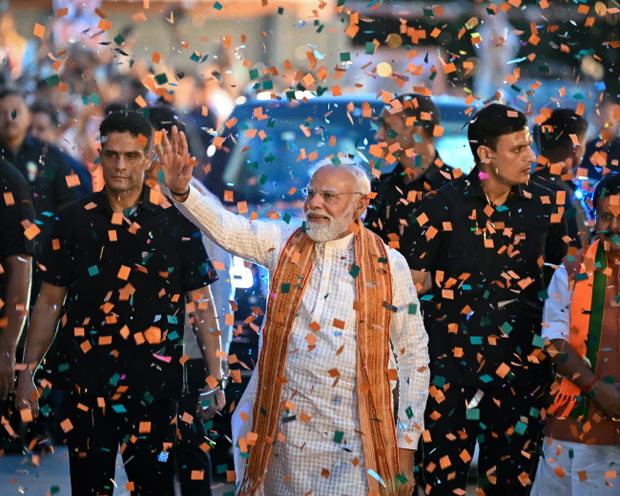
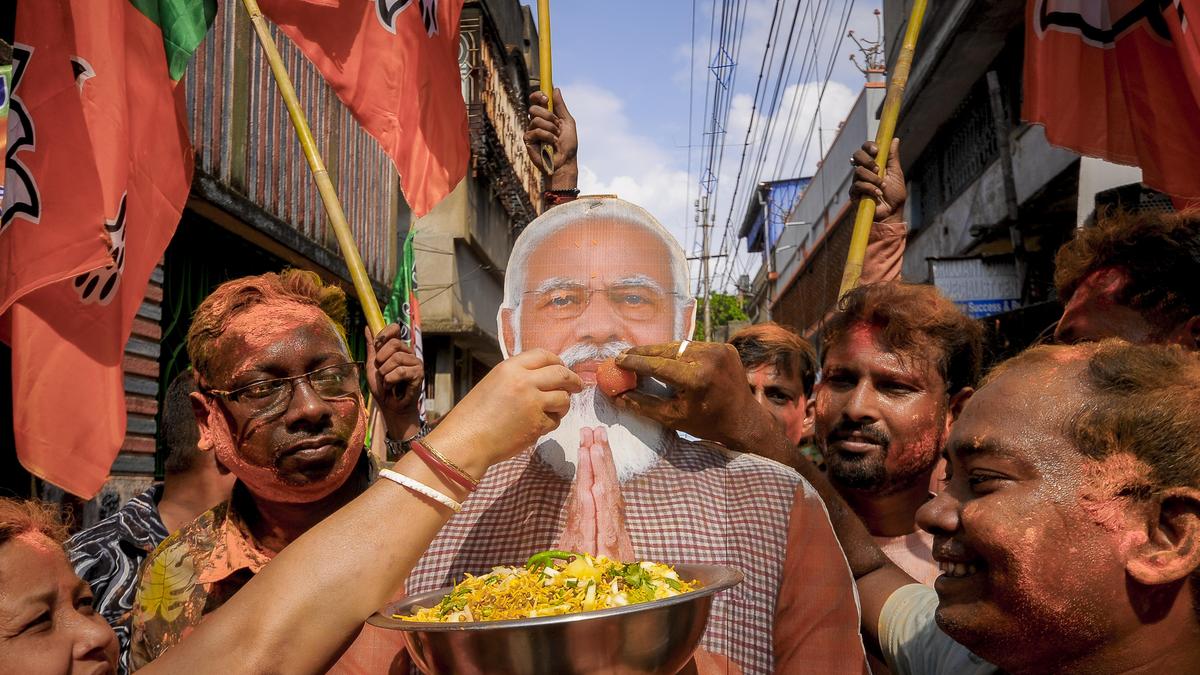
In this election, however, voters delivered a decisive mandate in favour of the BJP. Early trends and final counts indicate that the party secured more than 205 seats in the 294-member state assembly, giving it a comfortable and historic majority.
Prime Minister Modi Reacts
Reacting to the results, Prime Minister Narendra Modi described the victory as a triumph of democratic will and good governance. He expressed gratitude to the people of West Bengal for placing their trust in the BJP.
“In a post on X following the results, Modi declared: “The Lotus Blooms in West Bengal!” a nod to his party’s symbol. “People’s power has prevailed and BJP’s politics of good governance has triumphed,” he said.
BJP Wins West Bengal Assembly Elections for the First Time
.
BJP’s Growing Political Reach
The West Bengal victory strengthens the BJP’s dominance at both the state and national levels. Since coming to power at the Centre in 2014, the party has steadily expanded its footprint across India, while opposition parties have struggled with internal divisions and declining public support.
On the same day, the BJP also retained power in Assam, further consolidating its position as the most influential political force in the country. The party is now in power in a majority of Indian states.
Electoral Roll Controversy
The election was not without controversy. Ahead of polling, a special revision of the electoral roll led to the removal of millions of names. Opposition parties alleged that minority communities were disproportionately affected, accusing the BJP of attempting to influence the outcome.
The government denied these allegations, stating that the revision was conducted to remove duplicate and illegal entries and to ensure a fair electoral process.
Expert Analysis
Political analysts believe the BJP’s victory resulted from a combination of anti-incumbency sentiment, a well-organised grassroots campaign, and Narendra Modi’s personal popularity among voters.
Experts also noted that while the voter list revision may not have determined the overall outcome, it may have influenced results in closely contested constituencies.
Impact on Opposition Parties
The result has dealt another setback to the opposition, particularly the Congress party, which continues to struggle to regain its national standing. The BJP’s recent electoral successes suggest that the party has regained momentum after facing challenges in the 2024 general election.
Despite the sweeping win, analysts caution that economic pressures, unemployment concerns, and global instability could pose challenges for the BJP in the future.
Southern India Still a Challenge
While the BJP has expanded its influence in eastern and northeastern India, southern states continue to resist its dominance. States such as Kerala and Tamil Nadu remain strongholds of regional and opposition parties, although political dynamics there are also beginning to shift.
The West Bengal verdict, however, stands as a landmark moment in Indian politics, symbolising the BJP’s expanding reach and the changing preferences of voters across the country.
© UniversalTimes | Assembly Election Coverage