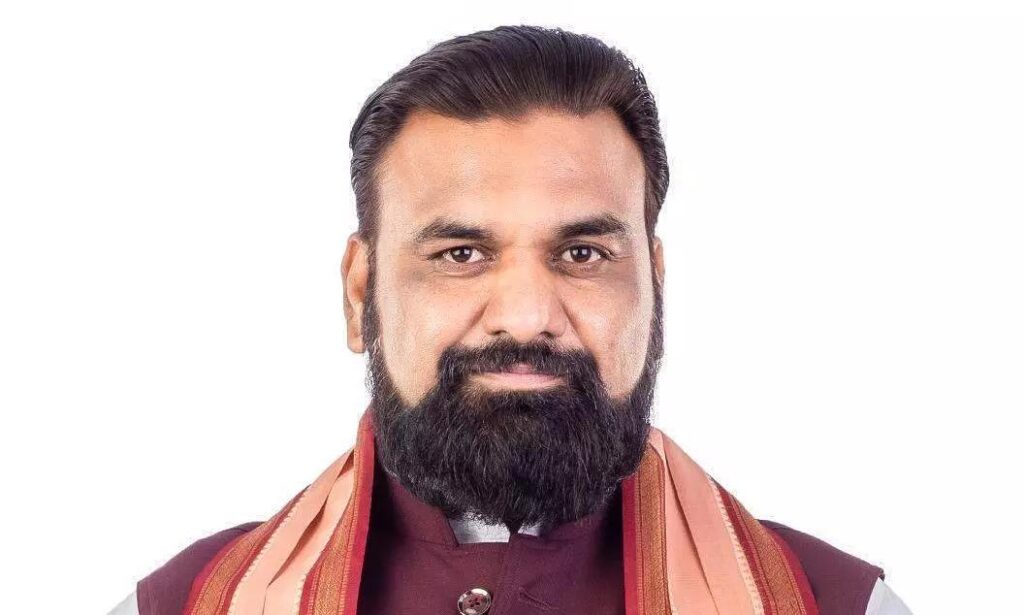
On 15 April 2026, Samrat Choudhary was sworn in as the 24th Chief Minister of Bihar, marking a historic shift in the state’s political landscape as the first leader from the Bharatiya Janata Party (BJP) to assume the post. His elevation ended the long tenure of veteran leader Nitish Kumar, who dominated Bihar politics for over two decades. Choudhary’s rise reflects both the changing power balances within the BJP-led National Democratic Alliance (NDA) and the party’s strategic push to broaden its social base — particularly among the Other Backward Classes (OBCs).
Early Life and Family Background
Samrat Choudhary was born on 16 November 1968 in Lakhanpur, a village in the Munger district of Bihar. He hails from a family deeply embedded in Bihar’s political fabric. His father, Shakuni Choudhary, was a seasoned legislator, elected multiple times from the Tarapur constituency, and his mother, Parvati Devi, was also involved in public service and politics. Growing up in this environment, Samrat was exposed early to political discourse, grassroots leadership, and the complex caste dynamics of Bihar’s electoral politics.
Choudhary belongs to the Koeri-Kushwaha community, an influential OBC group in Bihar. This social identity would later become central to his political appeal, particularly as the BJP sought to expand its footprint beyond its traditional upper-caste support base. His upbringing in a politically active family set the stage for an early entry into public life and electoral politics.
Education and Early Influences
After completing his early schooling in Bihar, Choudhary pursued higher education at Madurai Kamaraj University in Tamil Nadu. While details about his academic specialization remain under discussion in public records, the experience of studying outside his home state contributed to his broader political outlook and familiarity with diverse cultural environments. However, aspects of his educational record have occasionally become the subject of public scrutiny and debate.
His formative years coincided with Bihar’s fierce political transformations during the late 1980s and 1990s — an era marked by the rise of regional parties, caste-based mobilization, and shifting governance paradigms. These contextual influences shaped Choudhary’s understanding of grassroots politics and coalition dynamics that remain hallmarks of Bihar’s political culture.
Entry into Politics — 1990s and RJD Connection
Choudhary entered active politics in the early 1990s, initially aligning with the Samata Party, a political outfit that later merged into broader alliances championing social justice and anti-crime agendas in Bihar. His early political grooming involved navigating the turbulent landscape of Bihar’s caste-centric mobilization and factional rivalries.
In 1999, he joined the Rashtriya Janata Dal (RJD), the party led by Lalu Prasad Yadav, which at the time wielded significant influence in state politics. Under RJD governance, Choudhary was appointed Minister of Horticulture, Weights, and Measures in the cabinet led by then-Chief Minister Rabri Devi, although controversies (including eligibility questions) truncated his initial ministerial tenure.
Despite these early upheavals, Choudhary solidified his role as a grassroots politician and was first elected to the Bihar Legislative Assembly in 2000 from the Parbatta constituency as an RJD candidate. This electoral success reflected his ability to mobilize voters and navigate the localized contexts of Bihar’s electoral landscape.
Shifting Alliances — JD(U) and Early Legislature Work
After his stint in the RJD, Choudhary transitioned to the Janata Dal (United) (JD(U)), led by Nitish Kumar, who was emerging as a central figure in Bihar politics with a platform emphasizing governance reforms and development. Within JD(U), Choudhary continued to expand his legislative credentials. He won another term as MLA in 2010, again from Parbatta, and was appointed Chief Whip of the Opposition in the Bihar Legislative Assembly — a role that sharpened his organisational skills and legislative strategy.
During this period, his work involved navigating complex coalition equations between JD(U), the BJP, and other allies, particularly as Bihar’s politics oscillated between development agendas and caste-based electoral calculations. These formative years cemented his reputation as a negotiator within Bihar’s fractious political structure.
Joining the BJP — Strategic Realignment
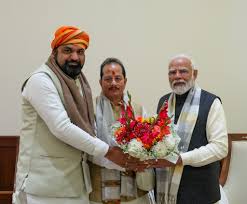
In 2017, Choudhary made a strategic shift by joining the BJP, a move that marked a significant turning point in his political career. This transition aligned him with the party of Prime Minister Narendra Modi, which was aggressively expanding its reach in eastern India. Within a relatively short span, Choudhary ascended the ranks in the state BJP structure — a testament to his organisational acumen and appeal among OBC communities whom the BJP had targeted to broaden its electoral coalition.
By 2023, he was appointed BJP State President in Bihar, a role that positioned him as a key strategist for upcoming state elections and internal party consolidation. His leadership during state election campaigns, as well as his ability to bridge local caste equations with the BJP’s broader political messaging, strengthened his stature within the party.
Roles in Government — Minister, Deputy CM, and Leadership Roles
Following the 2025 Bihar Legislative Assembly elections, in which the NDA retained power with the BJP emerging as the largest single party in the assembly, Choudhary was elected leader of the BJP legislative party. Subsequently, he was sworn in as Deputy Chief Minister of Bihar in January 2024. In this capacity, he handled key portfolios including Home, Finance, Health, Panchayati Raj, Urban Development, and more — areas central to administrative governance and policy implementation. His time as Deputy CM exhibited his administrative style, balancing developmental rhetoric with assertive political presence.
As Deputy CM, Choudhary often represented the government alongside Nitish Kumar at official functions and public events, highlighting the complex yet collaborative nature of NDA governance in the state. His public statements and media engagements revealed a leader keen on projecting assertiveness — a contrast to Kumar’s more seasoned consensus-driven approach.
Becoming Chief Minister — Historic First for BJP
The political landscape shifted profoundly in March 2026 when Nitish Kumar announced his intention to resign after winning a seat in the Rajya Sabha. This cleared the way for Choudhary to ascend as the new Chief Minister. On 15 April 2026, he took the oath of office, with senior BJP figures and NDA partners in attendance, officially becoming the first BJP member to lead the Bihar government.
At the swearing-in, Choudhary pledged commitment to good governance, development, and fulfilling the aspirations of Bihar’s citizens. His elevation was portrayed by party leaders as fulfillment of a long-term strategic goal for the BJP — achieving direct governance in one of India’s most electorally significant states.
Governing Style and Policy Focus
Upon taking office, Choudhary retained the Home Ministry and 29 key departments, signaling a centralized approach to governance and policymaking. This decision indicated his intent to maintain firm control over internal security, law and order, and administrative coherence during his initial tenure.
His public addresses emphasize economic development, job creation, infrastructure enhancement, and improving governance outcomes across sectors such as health, education, and urban planning. While these pledges align with broader NDA policy goals, Choudhary also faces the challenge of addressing persistent issues such as unemployment, rural distress, migration out of Bihar, and strengthening grassroots administrative capacity.
Challenges, Criticisms, and Public Perceptions
Choudhary’s rise has not been without controversy. His political trajectory from RJD to JD(U) to BJP has drawn criticism from opponents who question ideological consistency. Additionally, various public debates have arisen regarding his educational record and past controversies, though none have resulted in legal impediments to his political career.
As Chief Minister, he must navigate intra-coalition dynamics within the NDA, manage Bihar’s complex caste calculations in future elections, and meet elevated public expectations for development and governance. Critics have also argued about whether his leadership style will unify diverse social groups or deepen existing divides — questions common to any leader assuming high executive office in a complex polity like Bihar.
Personal Life and Family
Samrat Choudhary is married to Mamta Kumari, and the couple has two children. His personal life has largely remained private compared to his public roles, though family support is often cited in media profiles as critical to his long political journey.
Conclusion — A Crucial Moment in Bihar’s Politics
Today, Samrat Choudhary stands at the pinnacle of Bihar’s political power, embodying both continuity and change. His journey from a young legislator in the early 1990s to the state’s first BJP Chief Minister encapsulates the evolving currents of Indian regional politics — where caste dynamics, coalition strategies, and organisational agility intersect with developmental aspirations. As Bihar enters this new chapter under his leadership, Choudhary’s governance will be closely watched for its impact on economic progress, social cohesion, and political stability in one of India’s largest and most complex states.