Trump says talks with Iran continue
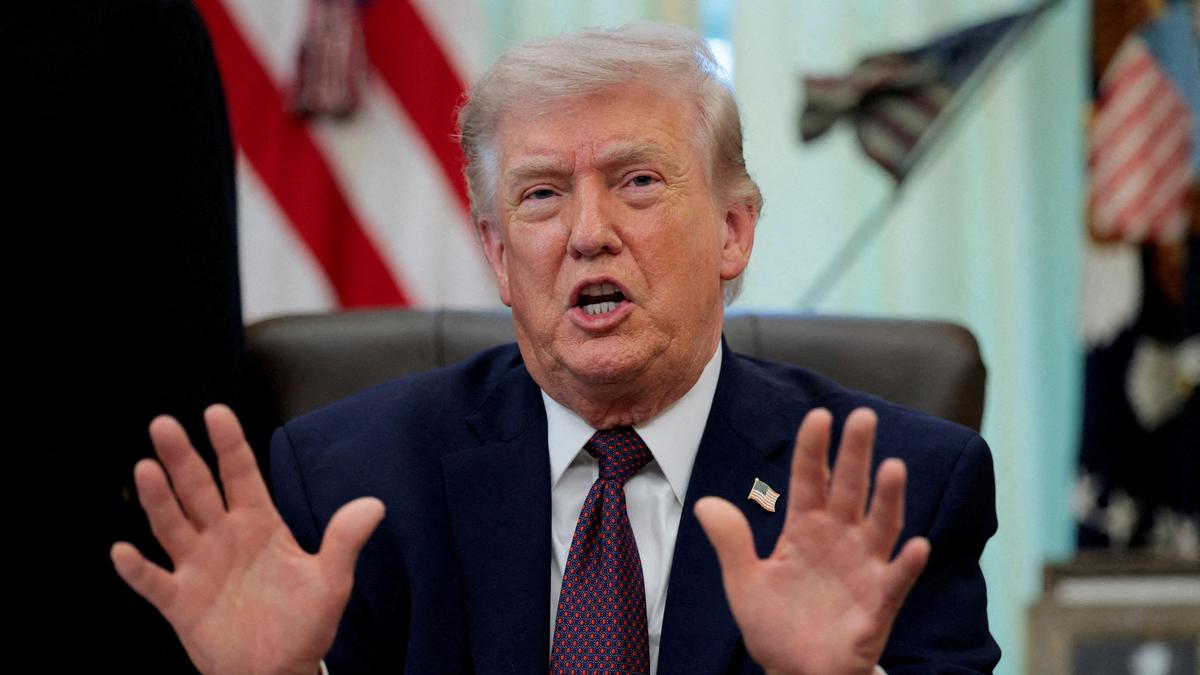
Despite mounting military and diplomatic tensions across West Asia, U.S. President Donald Trump has said that discussions between the United States and Iran remain active. His comments came in response to reports suggesting that Tehran had paused indirect negotiations with Washington following recent Israeli military actions in Lebanon.
On Monday, Trump took to his social media platform to clarify the U.S. position, stating that diplomatic engagement with the Islamic Republic of Iran was still underway and progressing at what he described as a “rapid pace.” His remarks appeared aimed at countering speculation that communication channels had broken down completely amid escalating regional hostilities.
Conflicting Reports on the Status of Talks
Earlier in the day, Iran’s state-linked Tasnim news agency reported that Tehran had decided to halt indirect talks with the United States. According to the report, the decision was taken after Israel ordered its forces to push deeper into Lebanese territory, a move that further inflamed an already volatile situation along Israel’s northern border.
The Tasnim report fueled concerns among international observers that the fragile diplomatic process—designed to reduce tensions and prevent a wider regional conflict—might be collapsing. However, Trump insisted that the U.S. had received no formal communication from Tehran confirming such a suspension.
In interviews conducted shortly after the report surfaced, Trump said American officials had not been informed of any decision by Iran to step away from negotiations.
“They haven’t told us that,” Trump said in an interview with NBC News, suggesting that back-channel diplomacy may still be active despite public rhetoric on both sides.
Trump Signals Patience, Downplays Silence
While emphasizing that talks were continuing, Trump also signaled that a pause in communication would not necessarily be a negative development. In fact, he suggested that reduced public dialogue could help lower tensions rather than escalate them.
“I think we’ve been talking too much, if you want to know the truth,” Trump said. “Going silent for a while could actually be very good. That silence could last a long time, and that’s fine.”
His comments reflect a negotiating style he has used in previous international disputes—mixing public pressure with an apparent willingness to wait out the other side. According to Trump, the absence of frequent communication does not equate to diplomatic failure.
No Immediate Military Escalation, Trump Says
Addressing concerns that a breakdown in negotiations could lead to U.S. military action against Iran, Trump dismissed the idea that Washington was preparing for immediate escalation.
A suspension in talks, he said, would not automatically result in U.S. airstrikes or direct military engagement. However, he confirmed that existing pressure measures against Iran would remain firmly in place.
“The blockade of Iranian ports stays,” Trump told reporters, referring to economic and logistical restrictions imposed as part of Washington’s broader strategy to constrain Iran’s regional influence and military capabilities.
This stance underscores the administration’s dual-track approach: maintaining pressure through sanctions and blockades while keeping diplomatic channels open, even if indirectly.
Mixed Messages in Separate Interviews
In a separate interview with CNBC, Trump appeared even more dismissive about the future of negotiations, saying he would not be troubled if talks were to end altogether.
“I don’t care if they’re over, honestly,” Trump was quoted as saying. “I couldn’t care less.”
While such remarks may appear contradictory, analysts say they reflect Trump’s effort to project strength and unpredictability—hallmarks of his negotiating strategy. By signaling indifference, Trump may be attempting to pressure Tehran into concessions or discourage it from using negotiations as leverage.
Iran’s Perspective and Regional Context
From Iran’s point of view, the situation is deeply intertwined with developments beyond the negotiating table. Israeli military operations in Lebanon, ongoing conflict in Gaza, and heightened tensions in the Red Sea and Persian Gulf have all contributed to Tehran’s increasingly hardline posture.
Iranian officials and media outlets have repeatedly argued that meaningful negotiations cannot take place while Israel continues military actions against Iran’s allies in the region. Tehran views such actions as part of a broader campaign backed—directly or indirectly—by Washington.
The reported halt in indirect talks, whether temporary or symbolic, appears to be intended as a warning rather than a final rupture. By signaling dissatisfaction through state media, Iran may be attempting to extract diplomatic concessions or at least draw attention to its grievances.
The Role of Indirect Diplomacy
Notably, the talks in question are not direct negotiations between U.S. and Iranian officials. Instead, they rely on intermediaries—often regional actors or European states—to pass messages between the two sides.
This indirect format allows both governments to maintain hardline public positions while quietly exploring de-escalation behind the scenes. Such arrangements have been used frequently in U.S.–Iran relations, particularly during periods of heightened tension.
Trump’s insistence that talks are ongoing suggests that these intermediary channels remain functional, even if formal meetings have paused or slowed.
Strategic Silence as a Negotiating Tool
Trump’s remarks about silence being “very good” highlight a broader philosophy within his approach to foreign policy. Rather than constant engagement, strategic quiet can create uncertainty for the opposing side and potentially encourage compromise.
For Iran, silence from Washington could be interpreted in multiple ways—either as a sign of patience or as preparation for tougher measures. Likewise, Tehran’s own silence may be designed to test Washington’s resolve.
Analysts caution, however, that prolonged silence carries risks, especially in a region where misunderstandings can quickly escalate into military confrontations.
Global Reactions and Market Implications
International markets and diplomatic observers have been closely watching developments between Washington and Tehran. Any indication that talks are failing tends to drive up oil prices, increase shipping risks, and raise concerns about freedom of navigation in critical waterways such as the Strait of Hormuz.
Trump’s assurance that talks are continuing provided some reassurance to markets, though uncertainty remains high. Investors and governments alike understand that even indirect negotiations can collapse quickly if regional violence intensifies.
A Fragile Path Forward
As of now, the situation remains fluid. Trump’s public comments suggest confidence that diplomacy—formal or informal—has not yet run its course. At the same time, his willingness to accept an end to talks underscores the fragile and transactional nature of the process.
For Iran, continued Israeli military actions in Lebanon and elsewhere remain a central obstacle. For the United States, maintaining pressure while avoiding a wider war is a delicate balancing act.
Whether the current phase of talks leads to de-escalation or gives way to renewed confrontation will depend largely on events on the ground—and on how long both sides are willing to tolerate silence.
Conclusion
The latest statements from President Donald Trump reflect a complex and often contradictory diplomatic landscape. While reports from Iranian media suggest a pause in indirect negotiations, Trump insists that dialogue continues and that Washington remains open to waiting.
At the same time, the U.S. president has made it clear that pressure on Iran will not ease and that silence, rather than signaling failure, may be part of a broader strategy.
In a region already strained by conflict, the fate of U.S.–Iran talks remains one of the most closely watched developments—one that could shape the future stability of West Asia in the months ahead.
universaltimes.in is proudly powered by WordPress