“I Will Do What I Have To Do” If Iran Does Not Stick To Deal,
Trump Warns Iran
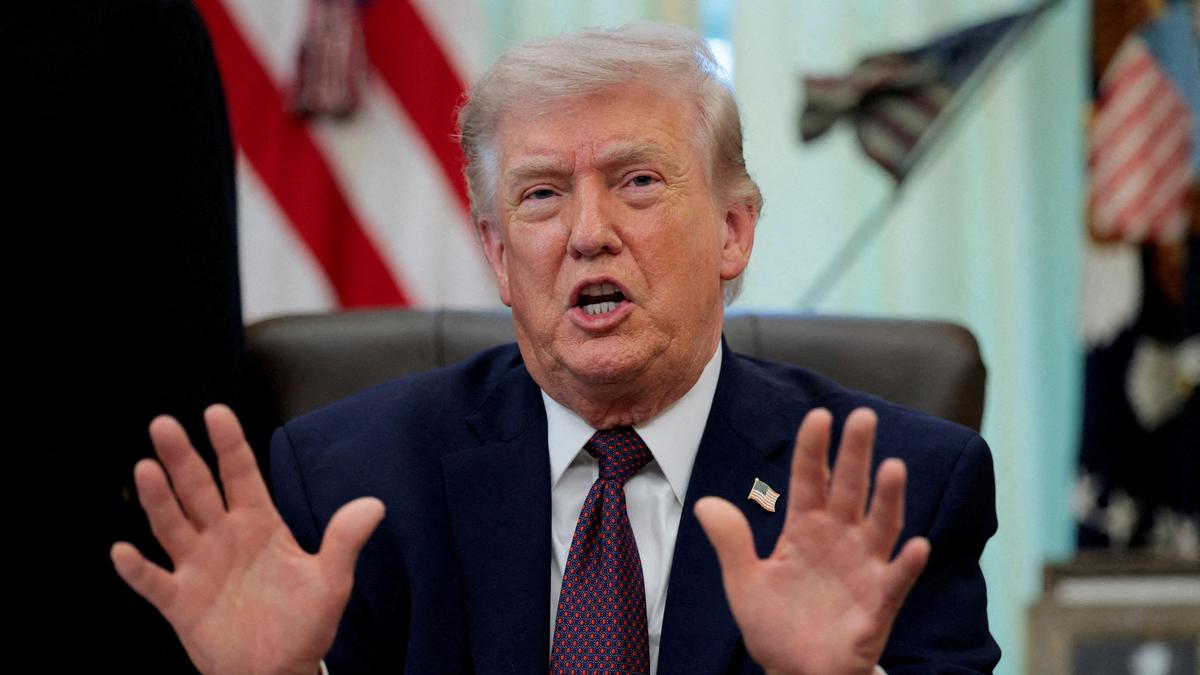
United States President issued a firm warning on Monday, making it clear that Washington is prepared to take decisive action if Iran fails to honor the commitments outlined in its recent understanding with the US administration. Speaking to reporters, Trump used unmistakably blunt language, stating that he would “do what I have to do” should Iran fall short of its obligations or act in a manner that contradicts the spirit of the agreement.
The remarks come at a delicate moment in Middle Eastern geopolitics, where tensions remain elevated following months of military escalation, diplomatic maneuvering, and economic uncertainty. Trump emphasized that the interim arrangement signed with Tehran was based on clear expectations, mutual responsibilities, and strict conditions, adding that any deviation would prompt a response from Washington.
According to Trump, compliance is not optional. He told journalists that the agreement was designed to ensure stability and accountability, and that Iran was fully aware of the consequences of failing to adhere to its terms. “If Iran doesn’t live up to their agreement, or if they’re not behaving, I will do what I have to do,” he said, reinforcing a message of deterrence rather than negotiation.
The interim deal was signed last week between Trump and Iranian President , marking a significant diplomatic development after a prolonged period of hostility. The agreement followed more than three months of open conflict, during which US and Israeli forces carried out coordinated strikes on Iranian targets, and Iran responded with attacks aimed at Israel and Gulf countries hosting US military bases.
Those confrontations represented one of the most dangerous phases in recent regional history. Missile exchanges, drone strikes, and air raids pushed the region closer to a broader war, prompting global concern about energy supplies, shipping routes, and civilian safety. While the interim deal does not represent a comprehensive peace settlement, it has been widely viewed as a temporary mechanism to prevent further escalation.
Trump explained that a central component of the agreement involves the partial unfreezing of Iranian funds that had been locked under US-led sanctions. However, he stressed that the use of this money is strictly controlled. According to the US president, Iran is expected to spend the released funds exclusively on food purchases from American suppliers.
“All that money’s coming back in the form of purchases of food, which they desperately need,” Trump said. He went on to claim that Iran’s domestic food supply situation remains strained, pointing to the country’s large population and economic challenges. “They have 91 million people, they can’t feed them. So the money that we lift is going to go to our farmers,” he asserted.
The statement underscores how the agreement is being framed by Washington not only as a diplomatic tool but also as an economic strategy that benefits American agriculture. By requiring Iran to buy food from US producers, the administration aims to support domestic farmers while maintaining leverage over Tehran’s access to essential goods.
Critics, however, argue that such conditions place Iran in a position of dependency and could complicate the deal’s implementation. Iranian officials have not publicly disputed the food-purchase clause, but analysts note that enforcing such restrictions may prove challenging in practice, especially given Iran’s existing trade relationships and logistical constraints.
The broader backdrop to the agreement remains grim. US-Israeli military operations in Iran, combined with Israeli strikes in Lebanon, have resulted in widespread destruction. Thousands of people have been reported killed, while millions have been displaced across multiple countries. Entire neighborhoods have been reduced to rubble, and humanitarian agencies have warned of long-term consequences for civilians caught in the conflict.
Lebanon, already struggling with economic collapse and political instability, has faced renewed devastation due to intensified Israeli strikes targeting what Israel describes as militant infrastructure. The spillover effects of the Iran conflict have further strained the country’s fragile systems, adding to regional instability.
The war has also sent shockwaves through global markets. Energy prices surged as investors reacted to the risk of supply disruptions in one of the world’s most strategically important regions. Oil prices climbed sharply during the height of the fighting, fueling inflationary pressures in economies far removed from the Middle East.
Shipping and insurance costs rose as well, particularly in routes near the Persian Gulf and surrounding waterways. Several multinational companies temporarily rerouted cargo or delayed shipments due to security concerns, highlighting how regional conflicts can have worldwide economic repercussions.
Trump’s comments suggest that the interim deal is as much about maintaining pressure as it is about easing tensions. While the agreement has paused the most intense phase of hostilities, the US president’s language indicates that Washington remains prepared to reassert military, economic, or diplomatic force if it believes Iran is not acting in good faith.
Supporters of Trump’s approach argue that his hardline stance has compelled Iran to return to the negotiating table. They point to the interim deal as evidence that sustained pressure, combined with limited incentives, can produce results without requiring long-term concessions from the United States.
Opponents counter that such tactics risk prolonging instability and undermining trust. They warn that repeated threats could weaken diplomatic channels and increase the likelihood of miscalculation, particularly in a region already saturated with weapons, rivalries, and unresolved conflicts.
For now, the agreement stands as a fragile pause rather than a definitive resolution. Its success will depend on whether both sides adhere to the outlined terms and whether further dialogue can transform the interim arrangement into a more durable framework for coexistence.
As global attention remains fixed on the situation, Trump’s warning serves as a reminder that the path ahead is uncertain. The balance between enforcement and engagement, pressure and compromise, will shape not only US-Iran relations but also the broader stability of the Middle East in the months to come.
universaltimes.in is proudly powered by WordPress